
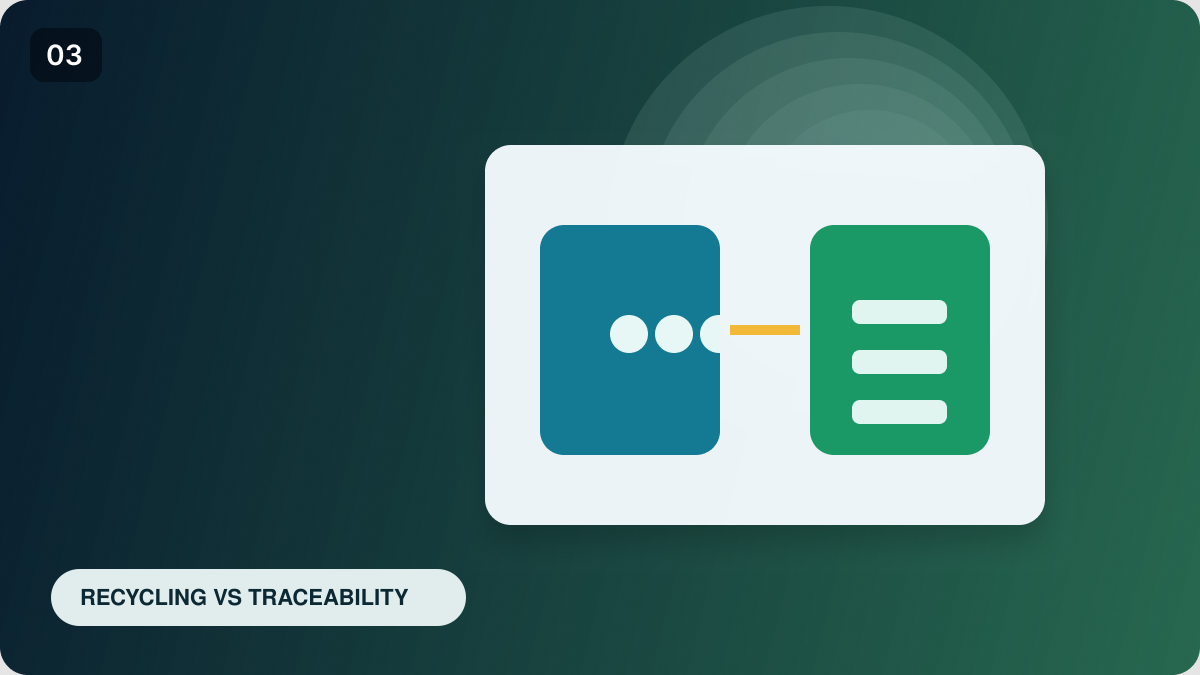
If the input is waste and the process turns it into recycled material, Recycling Process is the starting point. If a company purchases material that has already been recycled and uses it further downstream, Recycled Plastics Traceability is usually the relevant scheme.
The main difference: the status of the input material
Recycling Process covers a process in which plastic waste is converted into recycled output material. Recycled Plastics Traceability starts where recycled material is used further down the chain.
Recycling Process
The key areas are waste origin, the technical process, traceability, quality control, volume reconciliation and the status of the output material.
Recycled Plastics Traceability
The scheme focuses on the certified source of recycled material, downstream traceability, controlled blending, actual recycled content and product claims.
An example of the boundary
A facility washes, shreds and pelletises PET waste to produce pellets: it should consider Recycling Process. A preform manufacturer purchases those pellets and blends them with virgin plastic: to verify recycled content further down the chain, it should consider Recycled Plastics Traceability.
Can one company need both schemes?
Yes. An organisation may carry out a recycling process and then further process its own recycled material. In that case, it is important to define the scopes correctly and identify the point at which the material changes status in the chain.
What do the two schemes have in common?
- traceability;
- reliable quantitative data;
- control of suppliers and materials;
- volume reconciliation;
- consistency between claims and supporting evidence.
Key takeaway
Recycling Process primarily answers the question “How did waste become recycled material?”, while Recycled Plastics Traceability asks “What happened to the certified recycled material next, and how much of it is present in the product?”.