
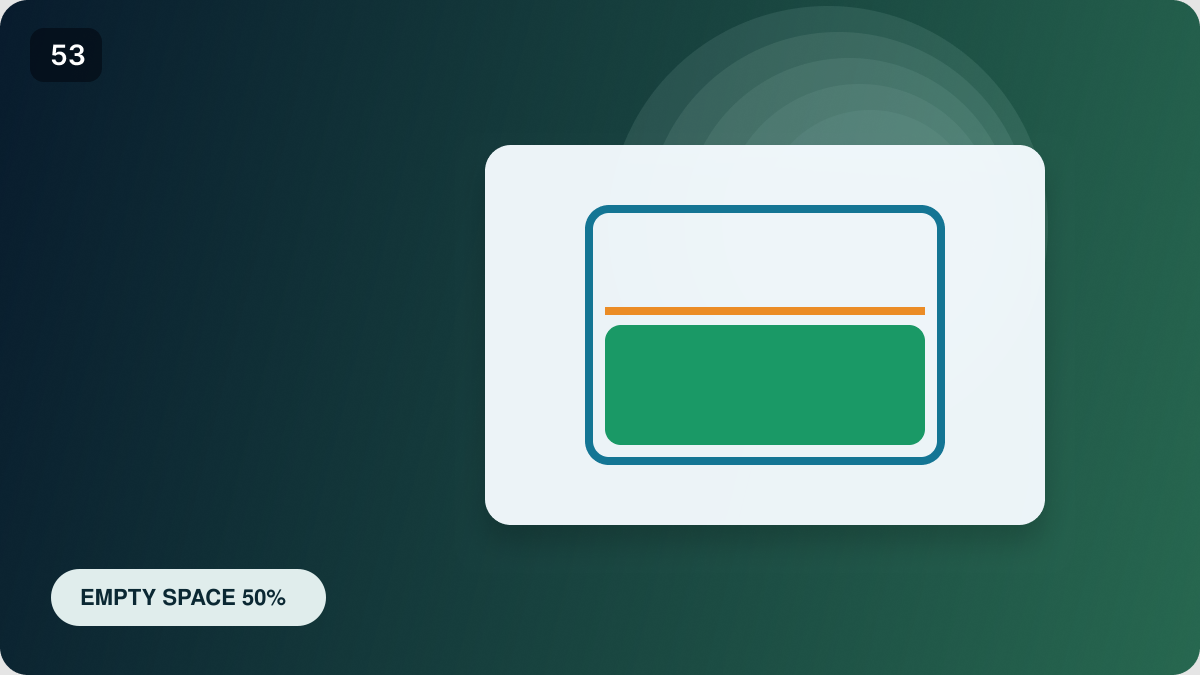
For certain grouped, transport and e-commerce packaging, the PPWR sets a maximum empty space ratio of 50%. Typical filling materials, including bubble wrap and air cushions, still count as empty space.
The PPWR 50% empty space limit
Article 24 of the PPWR sets a maximum empty space ratio of 50% for certain grouped, transport and e-commerce packaging. The obligation applies from 1 January 2030 or 36 months after the relevant implementing acts enter into force, whichever date is later.
1. What does empty space mean?
Empty space is the difference between the total volume of the grouped, transport or e-commerce packaging and the volume of the sales packaging it contains. The empty space ratio is this empty space divided by the total volume of the packaging being assessed.
2. Filling material does not fix the result
The PPWR states that space filled with materials such as paper cuttings, air cushions, bubble wrap, foam, wood wool or polystyrene chips is treated as empty space. Filling an oversized box with protective material therefore does not, by itself, improve the result.
3. Why is the 50% test not always a simple measurement?
Products may be irregularly shaped, fragile, contain liquids or need space for protection. The implementing methodology should account for such cases, so calculations should not rely solely on a company's own simplified formula.
4. Who does the requirement concern?
The obligation concerns economic operators filling certain grouped, transport or e-commerce packaging. Online sellers should also review shipping boxes and the way their sizes are selected automatically.
5. An example
If a shipping box has a volume of 20 litres and the sales packaging inside occupies 8 litres, the empty space is 12 litres. In this simplified example, the ratio is 60%, above the 50% limit. The final assessment must follow the relevant implementing methodology.
6. Packing automation
In large e-commerce operations, warehouse management system rules and box selection for each order may cause problems. Analyse the ratio by typical shopping baskets, product dimensions and how frequently each packaging format is used.
7. Product protection
The PPWR does not require packing in a way that causes damage. Appropriate space may be technically justified by shape, fragility, liquids, safety or the need to separate components.
8. Empty space ratio and packaging minimisation
These are related but separate requirements. Article 10 concerns the weight and volume of the packaging design, while Article 24 concerns the proportion of unused space in certain grouped, transport and e-commerce packaging.
9. How should a company prepare?
- list the formats of boxes and transport containers in use;
- identify e-commerce flows;
- collect dimensional data for products and sales packaging;
- review filling materials;
- check the packaging selection algorithm;
- prepare a way to record results and exceptions;
- monitor the implementing act on the methodology.
The main principle
Empty space does not disappear because it is filled with plastic film or air. Packaging design and order fulfilment must reduce excess space in practice.
FAQ
Does the limit apply to a product's sales packaging?
Article 24 focuses on certain grouped, transport and e-commerce packaging.
Can a box containing filler have 0% empty space?
No. Typical filling materials are still treated as empty space.
Does the 50% limit apply exactly from 1 January 2030?
The deadline also depends on when the implementing act establishing the methodology enters into force. The later date applies.